I — SENSE-CERTAINTY: or the “This” and “Meaning” (§§90–110)

Sense-certainty: the richest, most concrete, most infinite knowledge
Sense-certainty: actually the most abstract, poorest truth — just “it is”
§91 — The Reversal
Sense-certainty announces itself as the richest knowledge: this particular, right here, right now, in all its inexhaustible detail. But when you try to SAY what you know, all you can produce is: “it is.” The whole infinite richness of immediacy collapses into two words. What seemed like the most concrete turns out to be the most abstract truth consciousness has ever uttered.
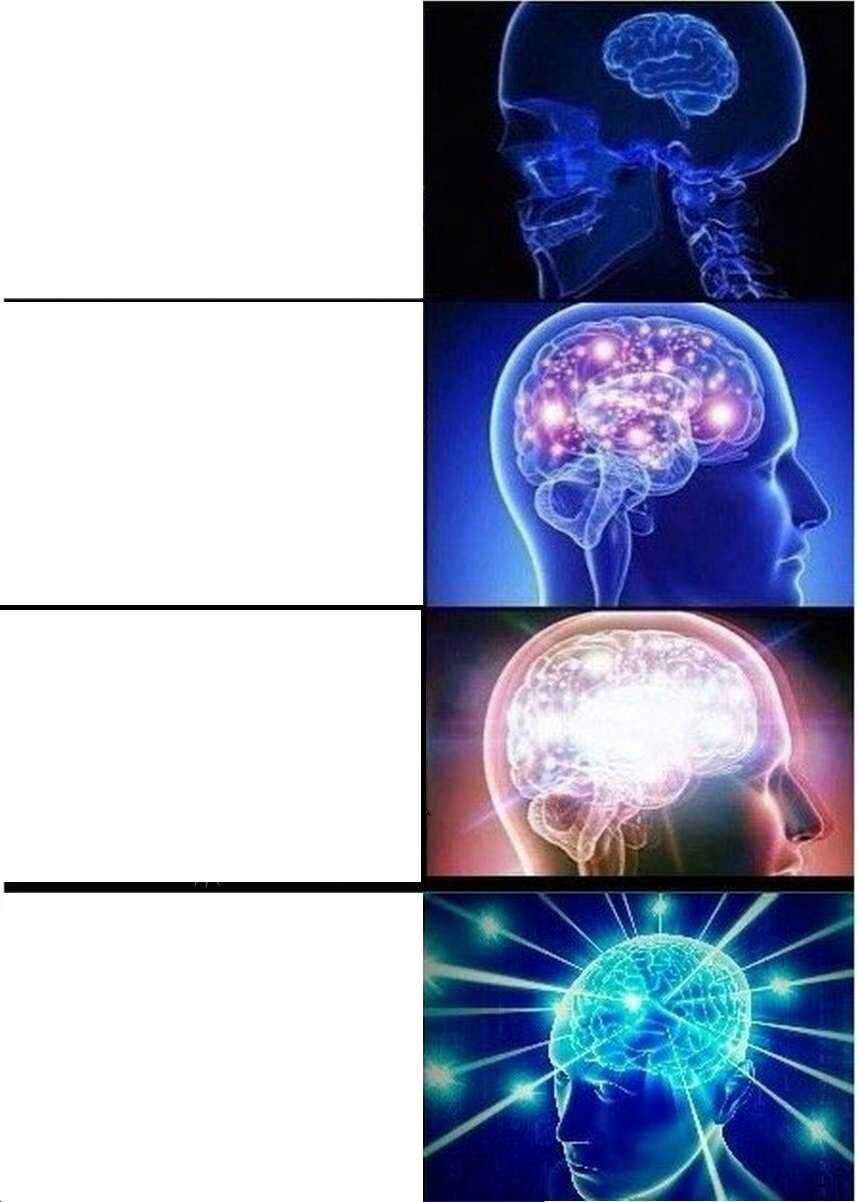
“Now” is night (I know this immediately)
Wait — now it’s noon. The “now” that was night is gone.
“Now” persists through both — it’s a universal, not a particular
Immediate certainty negated itself into mediated universality. The dialectic just happened.
§95–96 — The Dialectic of the Now
Hegel’s most elegant demolition. “Write it down: Now is night.” Walk outside at noon, read your note. The now that was night has been destroyed. But “now” is still here — it’s now noon. So the Now is NOT any particular moment. It’s a universal that persists precisely by negating each particular now. You tried to capture immediacy and accidentally proved that every “this” is already mediated.

Point to “Here” — this tree, right here
Turn around — “Here” is now a house
“Here” contains all heres and is therefore no particular here at all
“Here” contains all heres and is therefore no particular here at all
§98 — The Dialectic of the Here
“Here is a tree.” Turn around. “Here is a house.” The tree-here is gone. But “Here” persists — indifferent to tree or house. It’s a simple complex of heres, a universal containing every particular location by being none of them. The pointing finger that was supposed to pin down the immediate particular ends up tracing out a universal. Sense-certainty’s own gesture refutes it.
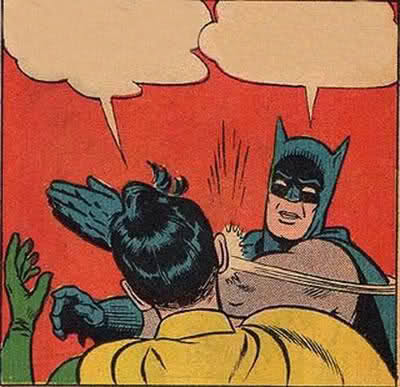
But I MEANT this particular, unique, unrepeatable—
Language only expresses the universal. Your private “meaning” is unsayable.
§97 — Meinen vs. Sagen (Meaning vs. Saying)
The cruelest blow. You MEAN (meinen) this particular thing, but the moment you SAY it, you use universal words: “this,” “here,” “now,” “I.” Every word is already universal. Language is “the more truthful” — it corrects what you meant by expressing what you actually said. Your private, ineffable meaning is literally inexpressible. “We do not envisage the universal This, or Being in general, but we utter the universal.”

I am a particular, unique “I” who anchors this certainty
Every “I” says “I” — you’re just another universal too
§101 — The “I” Is Universal Too
Sense-certainty’s last refuge: “Fine, the object is universal — but I, this particular I, am what makes the knowledge immediate and certain.” But “I” is the most universal word there is. When I say “I,” I mean this I. But every other I says the same thing. My “I” is no more particular than anyone else’s. The subject is just as universal as the object was. Both pillars of sense-certainty are gone.
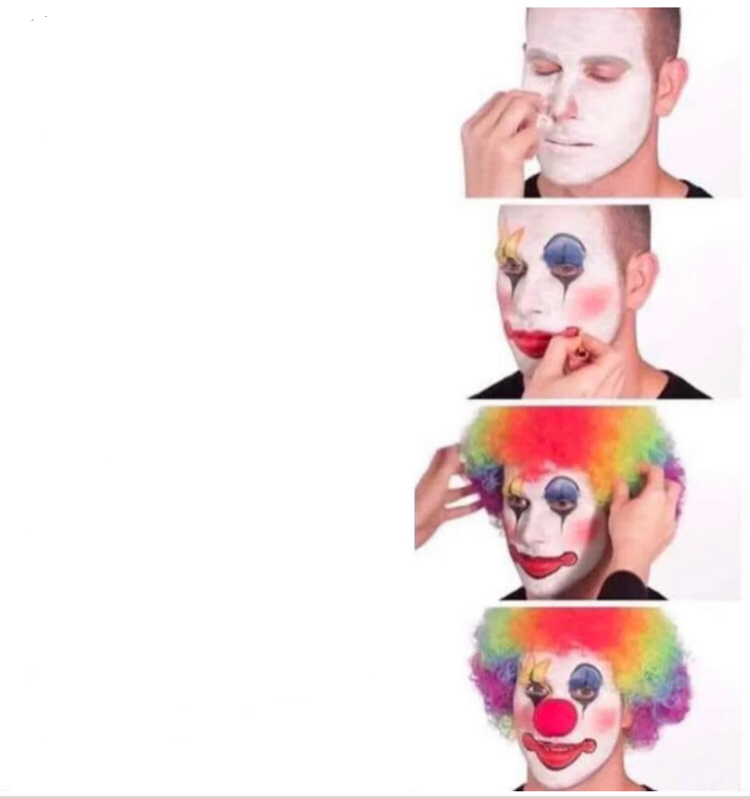
The truth is in the object — this particular thing
Ok the object failed, the truth is in my particular “I”
Ok the “I” failed, the truth is in the RELATION between I and object
The whole relation is a universal. I’ve been applying makeup this entire time.
§§92–103 — Three Strikes and You’re Out
Sense-certainty tries three times. First: the truth is the object. But the object (“this,” “now,” “here”) turned out to be universal. Second: the truth is the subject, the “I.” But “I” is universal too. Third: ok, the truth is the whole relation, the immediate unity of I-and-object. But pointing at it just traces out a movement — a here that was a tree and is now a house. The relation is mediated. All three pillars dissolved. Consciousness is the clown.

I’ll just point at this “Now” to show you what I mean
And the pointing will capture the particular?
By the time my finger lands, the Now I meant is already a past Now… right?
§105–107 — The Pointing That Destroys
“Point to the Now.” But pointing takes time. The Now I start pointing at is already gone by the time my finger arrives. What I indicate is a Now that “has been” — an aufgehobene Now, negated and preserved. The pointing gesture, meant to be the purest act of immediate reference, is actually a complex movement through negation. Even the simplest “look at this!” is secretly dialectical. Padmé knows.
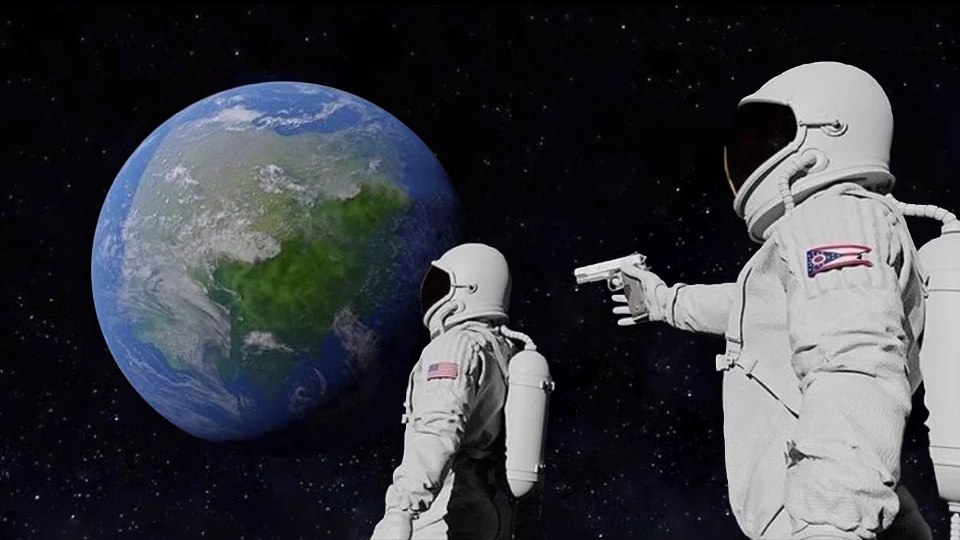
So the most immediate, richest knowledge was really the most abstract, poorest truth?
Always has been.
§109–110 — The Verdict
Sense-certainty entered boasting the richest content. It exits with nothing but “it is.” Pure Being, the most abstract category. Hegel even mocks it: animals don’t stand around in reverential sense-certainty — they just eat the thing. The animal is a better philosopher than the sense-certain consciousness. Sense-certainty has negated itself into perception, the next shape. It was always going to end here. The dialectic always has been.
II — PERCEPTION: or the Thing and Deception (§§111–131)

Perception
A thing that’s white AND cubical AND salty AND tart all at once
Is this one thing or many things?
§113 — The Thing and Its Properties
Perception inherits the universal from sense-certainty and tries to perceive things with properties. Salt is white, cubical, tart, salty — many properties in one thing. But how? Is the thing a passive medium where properties just coexist (“also”)? Or an exclusive One that actively unifies them? It can’t be both without contradiction. Perception is about to discover that the “thing” is philosophically incoherent.

I receive: unity (“one thing”)
You receive: multiplicity (“many properties”)
Perception trying to hold both at the same time
§114–115 — The One and the Also
The thing as One excludes other things and holds its properties together. The thing as Also is just a passive medium where whiteness, cubicality, and saltiness coexist indifferently. These are contradictory structures. The thing can’t be both an exclusive unity AND a passive community of independent properties. But it has to be. Perception keeps switching between them, hoping the contradiction will resolve. It won’t.
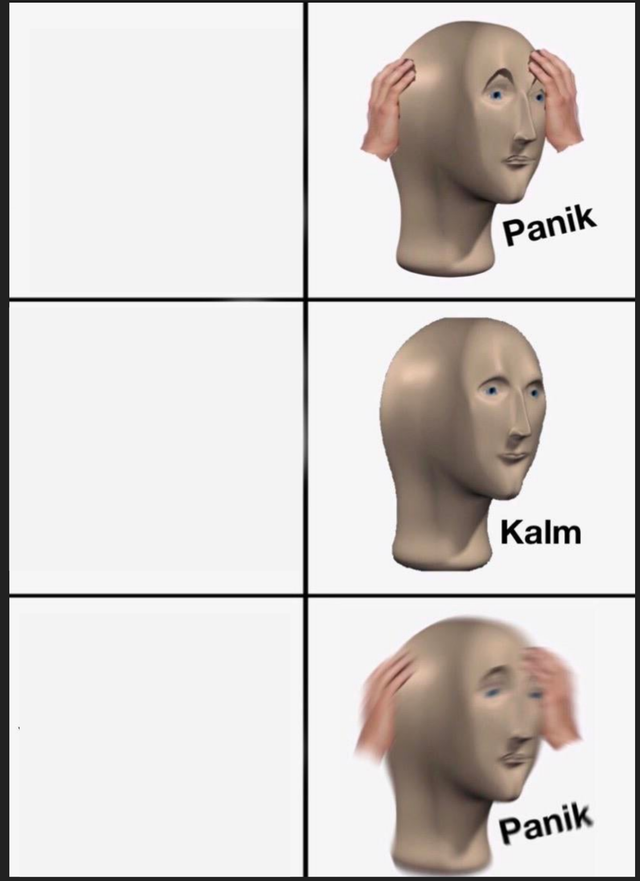
The thing contradicts itself! One AND many? (PANIK)
No wait — the error is in ME, not the thing (KALM)
But then I keep finding the SAME contradiction no matter how I look (PANIK)
§117–119 — The Blame Game
Perception hits the contradiction and immediately blames itself: “The thing is fine, I’m just perceiving it wrong.” So it corrects itself — and finds the same contradiction. Then: “Ok, the error IS in the thing.” But then the thing is objectively contradictory, and perception’s whole project (grasping a stable, self-consistent object) collapses. Consciousness bounces between self-blame and object-blame without realizing the problem is the framework itself.

“The illusion is in me”
“The illusion is in the object”
§120–121 — The Oscillation
The structure of deception in perception: if the error is in me, then I need to correct my perceiving. If the error is in the object, then the object is inherently deceptive. Either way, consciousness can’t get a clean, stable thing. The two Spider-Men point at each other endlessly because the contradiction isn’t in one side or the other — it’s in the relation itself. Perception’s framework can’t handle what it’s trying to think.

YOU ARE ONE THING! HOLD YOURSELF TOGETHER!
I’m white. Also cubical. Also tart. Also salty. We’re just vibing here.
§122–123 — The “Also” Won’t Behave
Consciousness demands that the thing be a unity. But the properties just sit there, indifferent to each other, connected only by “also.” White doesn’t care about cubical. Tart ignores salty. The “also” is the weakest possible connective — barely a relation at all. The One that’s supposed to hold them together is either empty (just a word) or it’s one more property alongside the others. Perception is yelling at salt.
The One
Exclusive, self-identical, repels all otherness, defines the thing
The Also
Passive medium, properties float independently, no real unity
§124–125 — Two Irreconcilable Structures
These two can’t both be the thing. If the thing is the One, properties are accidental and the thing is really propertyless. If the thing is the Also, there’s no unity and “thing” is just a word for a heap. Perception needs both and can’t have both. This is the engine of the whole chapter: two necessary moments that contradict each other, forcing consciousness forward into a higher shape that can hold the contradiction. That shape is the Understanding.

Can’t have a contradictory thing
If the contradiction IS the thing
§128–129 — The Unconditioned Universal
Perception’s final move: realize the thing is BOTH one and many, BOTH self-same and self-different. The contradiction isn’t an error — it’s the nature of the object. The “unconditioned universal” is a thing that relates to itself through its own otherness. Perception can’t think this — it can only handle fixed, stable objects. The Understanding can. Roll Safe sees the move before perception does.

Stable things with stable properties
Consciousness
Force, law, and the supersensible
§130–131 — Leaving Perception Behind
Perception wanted a stable world of reliable things. It got contradiction. Now consciousness is looking at something more interesting: the idea that behind the surface of things, there are FORCES — dynamic, relational, self-repelling-and-attracting. The thing as a bundle of properties is over. The Understanding is about to posit a whole invisible architecture behind appearances. Consciousness is distracted because the supersensible world is sexier than salt.
III — FORCE AND THE UNDERSTANDING: Appearance and the Supersensible World (§§132–165)
Things have properties
Forces express themselves as a play of appearances across a supersensible void
§132–136 — From Things to Forces
The Understanding dissolves the “thing” into Force. Properties aren’t stuck to things — they’re expressions of an underlying dynamic. Force has two moments: being compressed into itself (force proper) and being expressed outward (the play of forces). Each needs the other. Force can’t exist without expressing itself, and expression presupposes something being expressed. The tidy world of things gives way to a restless dynamic. Tuxedo Winnie has upgraded.
Force as a static substance behind appearances
Force as a self-soliciting movement — it draws itself out by pushing itself back
§136–141 — The Play of Forces
Force isn’t a hidden substance sitting behind things. It’s a movement. The soliciting force and the solicited force are really the same force in two moments. Each “solicits” the other: one draws the other out, but the drawing-out IS the being-drawn-out. They swap roles constantly. There’s no stable “inner” separate from the “outer.” The Understanding wants to find a quiet law behind the noise. It’s about to be disappointed.
There are things with properties
Behind appearances, there are laws governing forces
Behind that law, there’s an inverted world where sweet is sour
The “inner” was consciousness looking at itself the entire time
§§132–165 — Chapter III in Four Panels
The whole trajectory compressed. Understanding posits the supersensible world: stable laws behind the flux of force. But law is too static — it can’t explain change. So a SECOND supersensible world appears, the inverted world, where everything is its own opposite. But an inversion of an inversion is… the original. The two worlds collapse into each other. The “inner” that Understanding was looking for behind the curtain was its own activity of looking. Consciousness finds itself.

Explanation is just tautology — “electricity explains the spark” adds nothing to the spark itself
§154–155 — The Emptiness of Explanation
Hegel’s devastating critique of scientific explanation. “Electricity” doesn’t explain lightning — it’s just the name FOR lightning, restated as a hidden force. “Why does it spark? Electricity. What is electricity? The force that sparks.” The Understanding confuses naming with explaining. The “law” is just the appearance described in calmer language. The supersensible world that was supposed to be the deep truth behind phenomena turns out to be a “calm kingdom of laws” — an impoverished copy of what it was supposed to explain.

In the inverted world, punishment is forgiveness, sweet is sour, crime is virtue
This is fine, because it’s actually just the same world described from the other side
§157–160 — The Inverted World (die verkehrte Welt)
The weirdest passage in the whole Phenomenology. To explain change, the Understanding posits a SECOND supersensible world where everything is the opposite of the first: north is south, punishment is really forgiveness, the repellent is really the attractive. Scholars have fought over this for two centuries. Hegel’s point: the concept of a law that is its own opposite IS the concept of infinity — a self-relating negative movement. The Understanding is thinking dialectically without knowing it. The dog is sitting in a fire it lit itself.

When you build an entire supersensible architecture
And it was just your own thinking reflected back at you
§163 — The Curtain Falls
“Behind the so-called curtain which is supposed to conceal the inner world, there is nothing to be seen unless we go behind it ourselves, as much in order that there may be something behind there to see, as that we may have something to see.” The Understanding built the curtain, the supersensible world behind it, the inverted world behind that — and behind all of it, finds only itself. Harold’s pained smile is the face of consciousness discovering it was the author all along.

When you realize infinity isn’t a thing beyond the finite
It’s the movement of self-differentiation within the finite itself
§160–162 — True Infinity
The two supersensible worlds — the law-world and its inversion — collapse into each other. What remains is “infinity” — not the bad infinity of “and so on forever,” but TRUE infinity: a self-relating movement that differentiates itself from itself and returns to itself in the difference. This is the concept of Life. This is the structure of self-consciousness. The Understanding was building the concept of the I without knowing it. Pablo sits alone with this realization.

“I wAs LoOkInG fOr ThE tRuTh In ThE oBjEcT”
Congratulations, you just spent three chapters discovering that consciousness’s object is consciousness itself
§164–165 — The Transition to Self-Consciousness
The entire journey — from “this here now” to forces and laws to the inverted world — was consciousness slowly realizing that every object it examined was its own structure reflected back. The “inner” of things is the “I.” Now consciousness knows that what it’s really dealing with is ITSELF. Chapter A ends. Chapter B — Self-Consciousness — begins. The fight to the death is next. SpongeBob was there the whole time, mocking the long way around.